|
|
|
| 11 November 2009 |
| Emergency Lamp Sale |
As noted in my FB status update, I'm petitioning for some emergency help in gathering funds for some home plumbing repairs (amongst other financial needs) that have come up. Therefore I offer custom-made lamps from attractive liquor and wine bottles.
The prices are as follows:
Small Lamp (50ml flask size, 350-500ml): $40
Large Lamp (750 ml and larger): $50
(Sorry for the high prices--the shades and other materials aren't cheap, alas. But they are custom-made!)
If you need it shipped, you'll have to click the shipping button as well (which may process separately). I will work out a simpler system when I have time--like I said, something of an emergency. But for those in the area, I can easily arrange to get it to you.
ORDERING PROCESS: You must pay in advance so I can obtain the materials. Send me an email with your request (I can take special orders for bottles not in stock, but either you will need to provide the bottle, or it may be extra for me to obtain one). Click on the purchase button (PayPal) below. Once I receive payment and obtain the materials, I will work quickly to get the lamp to you. If you have any special requests (shade colour, for instance), let me know in the email. Otherwise, I'll pick a shade that fits the colour scheme and shape of the bottle.
Bottles currently in stock:
SMALL:
--Tokaji
--one strange bottle with a glass cluster of grapes inside
LARGE:
--Amarone (wine)
--Booker's Bourbon
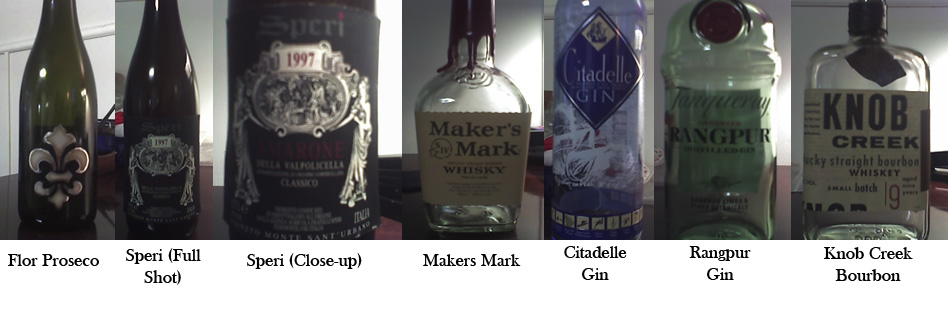
--Citadelle Gin (blue glass, 2 available)
--Cragganmore Scotch
--Cruzan Rum
--Edradour Scotch
--Flor Proseco (with a fleur-de-lis!)
--Fonseca Tawny Port
--Gabbiano Chianti
--Jose Cuervo Tradicional
--Ketel One Vodka
--Knob Creek Bourbon
--Makers Mark Bourbon
--New Amsterdam Gin (2 available)
--Sandeman Tawny Port
--Scarborough Mead (2 available)
--Tanqueray Rangpur Gin
--Taylor Fladgate Tawny Port
--1 green sake bottle
Shipping Only (if needed--may process as a separate purchase)
|
Jelly Pinched Wolf 5:58 PM
Email the Wolf |
|
| Looking for Dragons |
While on a hunt for something completely different, I happened upon this and rather liked it. So, apropos of nothing:
A new morality has burst upon us with some violence in connection with the problem of strong drink; and enthusiasts in the matter range from the man who is violently thrown out at 12.30, to the lady who smashes American bars with an axe. In these discussions it is almost always felt that one very wise and moderate position is to say that wine or such stuff should only be drunk as a medicine. With this I should venture to disagree with a peculiar ferocity. The one genuinely dangerous and immoral way of drinking wine is to drink it as a medicine. And for this reason: If a man drinks wine in order to obtain pleasure, he is trying to obtain something exceptional; something he does not expect every hour of the day; something which, unless he is a little insane, he will not try to get every hour of the day. But if a man drinks wine in order to obtain health, he is trying to get something natural; something, that is, that he ought not to be without; something that he may find it difficult to reconcile himself to being without. The man may not be seduced who has seen the ecstasy of being ecstatic; it is more dazzling to catch a glimpse of the ecstasy of being ordinary.
-G. K. Chesterton, from “Heretics” |
Jelly Pinched Wolf 11:00 PM
Email the Wolf |
| 08 June 2009 |
| Year in Review |
So, now that I am back for the summer to blog to no one (well, my original design for this blog was as a way of keeping the thoughts and writing flowing for my own personal benefit, and not for random cyber-people to peruse anyway, so at least I’m living up to that), I thought it best to hold with tradition and recap the year of teaching.
‘Twas a strange and action-packed year, to be certain—excellent, yet tiring. But I must, as is necessary from my viewpoint as teacher, begin with the kids. For it is they who make the job what it is, without whom I’d feel rather foolish since I’d be talking to myself in a room (and it’s not like I wouldn’t, either). This class holds a special place in my heart, though (and I can only hope they don’t find their way to this, as I’d rather not actually give credence to their surety that they’re my favourites—then again, if their egos need the boost, who am I stop it?). They were the Freshman class the year I began teaching—my own freshman year, as it were. And so to see them graduating was pretty darned amazing. And many of them I have taught two or three years out of the four (one poor soul got stuck with me all four years, though the first was just in homeroom; I’m not sure how he’ll ever recover from that…), so I know them very well. Though my senior AP classes tried my patience at times—oh, indifference, thy sting is terrible!—(which is just a part of the job after all), they really were rather wonderful. Good thinkers, some amazing writers, and quite a few marvellous souls. These kids are poised to take the world by storm, and I can only hope and pray that they live up to that potential. If they shock and amaze their peers and professors next year, it will only make me ever the prouder of them. They done good, says I.
Which does not mean there isn’t more good on the horizon. The incoming AP seniors that I know (ones I had as sophomores and those I was able to witness during a class swap—more on that later—are some heavy guns in the thinking and wonderfulness department). It might be a bit of a battle, though, since many are unfortunately coming in with preconceived notions about the ideas of the course (how dare you suggest that a monarchy could be a legitimate and fruitful form of government when we have this illustrious system here where nothing ever foul or unjust occurs? how dare you suggest that dragons might really have existed?—there’s no physical evidence, and if we can’t see it, it must not exist!). If there’s one thing that drives me crazy, it’s this ridiculous tendency in people (though I reckon it’s more or less always been this way) that because a ideology is from the past, we, in our clear and apparent “enlightenment” should be thrilled with ourselves for having cast the ideology into the darkness and moved beyond it. If it is of the good, if there is truth within it, then it is always good, always true. Because we have found another way of doing it doesn’t necessarily make it better, just different. Perhaps more appropriate to the needs of the age (as we are changeable and ever-changing beings), but not necessarily better. And not necessarily worse, either. I am not nor have ever been one to discredit what we have built here; it is good and worthy. But neither does that mean I cannot admire the beauty and rightfulness of a properly conducted monarchy. Sigh. Apologies for the rant. As I said, a wonderful but tiring year.
On the other side of things, we had quite an interesting year administratively—every one of our major administrative positions will find a new body within it next year. A flurry of departures at the end of the year (for a variety of reasons) will leave us with a very different team of bosses next year. And I think it a good thing—or at least interesting. But though I like things to be orderly and tidy, I am also a bit in love with occasional chaos (so long as it’s tidy, you understand), and so these sorts of change make things more interesting. Happily, my department head is still with us and managing things well—she’s wonderful, and so supportive; best I could hope for, really. And of course, there were the sorts of things we “cannot discuss” that occurred this year. I tell you what—corporate office politics have nothing on those of a high school. But as I respect the confines of my contract, and do still love where I work (more than any job I have ever done, and likely ever will, unless that whole fulltime author thing ever bloody well takes off), I must be content to say that I am a rebel, and apparently far more dangerous than I’d have hitherto imagined. But then, as I have always taught from the perspective that free thinking (true free thinking, like Socrates—not that hippified nonsense that essentially means “think whatever you want, even if it’s meaningless and has no basis in reality—just so long as it makes you feel good about yourself!”) is dangerous, and will more often than not put us in opposition to the majority of society at large, then I suppose that really shouldn’t come as a surprise. Silly me, teaching kids to think for themselves and to know how to question that which needs questioning.
And so, in the end, a good year. I robed 16 students at graduation (for those, like my wife, who’ve never heard of such a thing, my school has, at the beginning of the three-day graduation extravaganza, a segment of the awards ceremony devoted to the students getting to choose their most influential teacher or staff member to put their graduation gown on them as an entrance into above-noted extravaganza). Apparently, I robed the highest number for the year, which still amazes me. But it was a pretty terrific experience. And at the end of commencement, I got to give the benediction, for which I used the brilliant and illustrious words of John Henry Cardinal Newman (hooray for Anglo-Catholics!):
Dear Jesus, help us to spread your fragrance everywhere we go. Flood our souls with your spirit and life. Penetrate and possess our whole being, so utterly, that our lives may be only a radiance of yours. Shine through us, and be so in us, that every soul we come in contact with may feel your presence in our soul. Let them look up and see no longer us but only Jesus! Stay with us, and then we shall begin to shine as you shine; so to shine as to be a light to others; the light, O Jesus, will be all from you; none of it will be ours; it will be you, shining on others through us.
Let us thus praise you in the way you love best by shining on those around us. Let us preach you without preaching, not by words but by our example, by the catching force, the sympathetic influence of what we do, the evident fullness of the love our hearts bear to you. Amen.
One of the challenges (for me, at least) to teaching in a Catholic high school is dealing with all the fruity, hand-holdy, missing-the-point nonsense of the modern American liturgical practices. It was nice to give them something a bit more solidly orthodox as they head off to begin their lives.
As mentioned above, I did have one exciting teacher-exchange sort of experience this year. Since I didn’t have Junior AP, and one of the teachers doing it was new, I asked him if I could have a day to teach his class while they were doing Light in August. Why, you ask? Well, dear friends, because any chance I can get to talk about Faulkner is a good thing. I’d bloody well teach a Faulkner course if I could get away with it. Oh, if only…. Anyway, it was all kinds of good. This teacher isn’t much for the lit discussion-oriented approach, and so his students were ravenous to voice their ideas and delve into the rich depth of this novel. We may only have scratched the surface in that one class period (two separate classes in the day, though), but by God and St. George they did an awful lot of scratching. Rather a large number begged me to come back and do it again (which is always one of those terribly embarrassing, yet wonderfully ego-building moments). Oh, but it felt good to talk about Faulkner again! I mean, sure, I had The Sound and the Fury with my own juniors, but that’s always a struggle (yes, I know I’m a sadistic man giving one of Faulkner’s most difficult works to regular-level juniors, but I see it as a great reading tool, and a surprising number get more out of it than one might expect; invariably, they choose to use it on their final exams more than most of the other works from the semester. I see no reason not to set the bar high for them just because they’re “regular”). But chatting with those who are so desirous to understand more of what they’re reading like that—well, it’s just all good. And this gave me an introduction to many of the students I’ll have next year, so it’s really nice to see ahead of time the kinds of minds that’ll be tackling what I offer them as seniors.
And that’s pretty much it for the year, at least as far as school is concerned. I mean, I could go into specifics, but that would be boring for anyone but me, and I know them already. Next year should be more relaxed, actually, as I finally (barring sudden changes over the summer—) get to keep the same schedule two years in a row. Hey, I might actually be able to improve on things! Crazy! Our curriculum for the juniors is changing, but I’m excited about that. Only two major works for the year—The Crucible and The Great Gatsby. I am sad to see The Scarlet Letter go, because it’s just so darned beautiful and amazing, and I think they should encounter it even if they don’t get that much out of it, but then again, it is such a struggle to teach at this level, I shan’t be too upset. I will be adding A Canticle for Leibowitz to my own syllabus for the end of the year, since it’s just so wonderful, and I’ve already had success with it on the junior level (albeit in AP, but I don’t think it’ll matter—it’s not a terribly difficult read). But the rest of the year will be focused on short stuff (which is what Americans do best anyway), so we’ll get to play around with lots of short stories and essays and speeches. Huzzah for constantly-changing topics! Should be exciting—we’ll see how it works on the keeping-kids-engaged level.
On the personal side of things, I managed to complete one story during the year, which is to begin a series based around the same character, is vaguely steampunk, and which I hope to continue this summer. I have begun the newest round of agent-queries with a flashy new query letter, courtesy of kashi and friend Michelle, and am happy to report that I have my first bite. One agent requested further materials, and now I am waiting to hear back from her. Hopefully a request for the full manuscript will be forthcoming and then, who knows…. In the meantime, I’m sending more queries out and praying like mad. The rest of summer will consist of some Kingdom Hearts: Chain of Memories playing and a heckuva lot of reading. Summer reading list is as follows:
Small Favor - Jim Butcher
The Terror - Dan Simmons
To Say Nothing of the Dog - Connie Willis
Either Absalom, Absalom or Sanctuary (can't decide, but I'm committed to reading at least one Faulkner a year) - William Faulkner
The Historian - Elizabeth Kostova
One Melville novel (not sure which yet)
The Chronicles of Chrestomanci, Vol. 1 - Diana Wynne Jones
Sailing to Sarantium - Guy Gavriel Kay
Bag of Bones - Stephen King
Hell House - Richard Matheson
The Big Sleep - Raymond Chandler (forgot to add this earlier)
The following are required for school:
1984 (re-reading) - George Orwell
Catcher in the Rye (re-reading; or rather skimming, because I hate this book) - J.D. Salinger
I’ve finished Small Favour and am currently working on The Terror. Though if Simmons doesn’t pick up soon, I may have to set it aside for later or it’ll be the only other thing I read this summer. It’s not bad; he’s just taking his time with getting going.
And I reckon that’s all. Don’t know how much I’ll blog this summer, as I really don’t have a whole lot to say. Might ought throw some movie reviews up (Star Trek and Terminator in particular, and Up once we get around to seeing it), but otherwise, we’ll just have to see where the summer takes us. |
Jelly Pinched Wolf 1:52 PM
Email the Wolf |
| 02 June 2009 |
| The Height of Hilarity |
Probably one of the funniest passages in Three Men in a Boat (To Say Nothing of the Dog!) by Jerome K. Jerome:
How good one feels when one is full - how satisfied with ourselves and with the world! People who have tried it, tell me that a clear conscience makes you very happy and contented; but a full stomach does the business quite as well, and is cheaper, and more easily obtained. One feels so forgiving and generous after a substantial and well-digested meal - so noble-minded, so kindly-hearted.
It is very strange, this domination of our intellect by our digestive organs. We cannot work, we cannot think, unless our stomach wills so. It dictates to us our emotions, our passions. After eggs and bacon, it says, "Work!" After beefsteak and porter, it says, "Sleep!" After a cup of tea (two spoonsful for each cup, and don't let it stand more than three minutes), it says to the brain, "Now, rise, and show your strength. Be eloquent, and deep, and tender; see, with a clear eye, into Nature and into life; spread your white wings of quivering thought, and soar, a god-like spirit, over the whirling world beneath you, up through long lanes of flaming stars to the gates of eternity!"
After hot muffins, it says, "Be dull and soulless, like a beast of the field - a brainless animal, with listless eye, unlit by any ray of fancy, or of hope, or fear, or love, or life." And after brandy, taken in sufficient quantity, it says, "Now, come, fool, grin and tumble, that your fellow-men may laugh - drivel in folly, and splutter in senseless sounds, and show what a helpless ninny is poor man whose wit and will are drowned, like kittens, side by side, in half an inch of alcohol."
We are but the veriest, sorriest slaves of our stomach. Reach not after morality and righteousness, my friends; watch vigilantly your stomach, and diet it with care and judgment. Then virtue and contentment will come and reign within your heart, unsought by any effort of your own; and you will be a good citizen, a loving husband, and a tender father - a noble, pious man. |
Jelly Pinched Wolf 12:59 PM
Email the Wolf |
| 15 November 2008 |
| Skill: Intimidating Other Teachers |
Apparently, my tendency to write complex sentences with depth causes my fellow department members consternation. Likely perverse, but this causes me much joy.
So, yesterday, during a teacher workshop planned for our department on writing and assessment (with a lecturer from A&M), we had a short exercise wherein we read a passage and then were to individually write 2-3 sentences stating the argument or theme in the passage. Very similar to the writing work I did during the summer colloquium, except for the length limitation. So, I proceeded to state it as best and interestingly as I could, 'cause that's what I do. This is what I came up with:
"Man-made structures, including civilisation itself, are ephemeral. Understanding and accepting a city's transitory nature is necessary for a stable and content existence because the city's citizens can focus on essential matters of life and afterlife, and not become distracted by the inevitability of entropy."
Pretty straighforward, neh? Alas, in my reading of it to the group, many became rather insecure regarding their own statements (which were fine in their phrasing, by the way) and didn't want to read theirs after me. Which is ridiculous--I mean, we're all intelligent, capable individuals, and it's not as though I was trying to show anyone up. It's how I think and write, and cannot be helped. It'd be like trying to tell T.S. Eliot to stop being intellectual. Also, it's not that overblown. They should really fear what I would've done with some time to revise and edit. I reckon a few semi-colons later and I'd have come up with quite the Faulknerian line or two.
Still, mayhap I ought develop this skill. I mean, if I can intimidate such fine folk as these with a few hastily scribbled words, just imagine the posibilities.... |
Jelly Pinched Wolf 2:34 PM
Email the Wolf |
| 25 October 2008 |
| The Awesomeness of Language |
So, I must rant.
I know I should not be baffled (let alone outraged) by the fact that my AP students (some of whom may inevitably read this--but so be it) stand in judgement of Shakespeare's King Richard II for the sole reason that they don't believe it measures up to what, in their opinion, constitutes great storytelling. Never mind 400 years of respect accorded to this work, which constitutes part of the bloody canon of Western literature. Never mind that it possesses some of the most complexly wrought poetry and imagery the Bard himself ever composed--let alone anyone else in English literary history. Never mind that in six weeks of study, we actually were only really able to scratch the surface of this beautiful and challenging work. No, you see, it cannot possibly be worthwhile because, well, let's see: Richard's a big, selfish jerk, and it's boring. Oh, and it doesn't measure up to the greatness of the two (yes, two) other of his works they've read.
Sigh. Why are relevance and actiony plots so blasted essential to these kids? I know the science says they're too young for the depth of ideas and the true appreciation of poetry and rich symbolism, but by God and Saint George that seems to me such a cop-out. These are bright, bright kids. They know how to think--I've seen it. Goodness knows they've argued with me enough that I can see the thought happening. But on this sort of thing, there's such an intensely stubborn refusal to open up to what's there. And what is there? Staggering beauty. Richard II's a Michelangelo in words. Gorgeous language, rich, provocative imagery, and, my God, the pathos! Right to the heart, it goes! And relevant to anyone with a soul (or at least the ability to investigate honestly the yearnings of their souls).
Maybe it's just because I love language so very much. (Though I have entertained the thought that the fact that I'm more widely read--especially in the way of the Bard--has a little something to do with my appreciation of this play.) I mean, language is in my being. I like words. I like playing with them, saying them, hearing them, manipulating the meaning of them, composing them into poetry, picking them apart in others' poetry--words are what we are. They tell us where we're from and point us at where we're going. They're the links in the chain-link fence of our existence, the cherries in our cherry pie, the notes in our symphony, the tears in our sadness, the grounds in our coffee, the warmth in our love--the everything in our gorram everything. That they're not enough to express half what we know, or believe, or even what is, only makes them that much more a part of who we are. For to be human is to be incomplete, imperfect--yet exactly right for our design as humans. And what completes us? The Word--the divine one. You know, Logos--what was in the beginning, with God and was God? Funny, that. Again, sigh. How do you convey this to the young, cynical mind? The mind what is sure it knows everything. How did I get it (for, let's be honest here, that same young cynical mind was mine once upon a time--I've no delusions that I once thought the world ought revolve around my opinions)? Apparently, I can passionately blather at them all I want, and not a whit of difference shall it make. (Completely unrelated, it seems that G&Ts make my syntax even more pompous than usual.)
So, part of what sparked this post in the first place (in addition to the raging frustration, that is) was a small selection from Turgenev, writing about the violent reaction against Fathers and Sons (the next work I shall endeavour--fruitlessly though I fear it may be--to convince them is fabulous and brilliant). Mayhap I'm misconstruing what he's getting at here, but I find it terribly apropos to the current generation's view of literature and language, and therefore, as a way to end this rant, I offer it to you, ye silent viewing public. I hope you enjoy it as much as I do.
And my request consists of the following: guard our language, our splendid Russian language, transmitted to us by our predecessors, at whose head Pushkin again shines! Treat that powerful weapon respectfully; in able hands it can achieve marvels! Even those who don't care for "philosophical abstractions" and "poetic tenderness," practical people for whom language is only a means for expressing a thought, like a simple lever,--even to them I say: at least respect the laws of mechanics, extract the maximum use of everything. Or else, scanning some pale, confused, feebly long-winded verbiage, a reader involuntarily will think that you have exchanged a lever for some primitive props, that you are returning to the infancy of mechanics itself...
But enough, otherwise I too will become verbose.
Ivan Turgenev, from Apropos of Fathers and Sons |
Jelly Pinched Wolf 11:10 PM
Email the Wolf |
|
| Wanna Play Cards? |

Trust me, you don't want to play Blackjack with this kitty. |
Jelly Pinched Wolf 8:02 PM
Email the Wolf |
| 04 August 2008 |
| Back to It |
Actually, I'm back to several things. As of tomorrow, school things start up again, since I'm mentoring a new teacher this year. Otherwise, I'd have until Wednesday before the in-service begins. As of next Wednesday, though, school begins, and thus this blog will once more go into hiatus (more or less). As usual, I may try to post during the year, but of course can guarantee nothing.
More importantly, however, I am back to trying to get a blasted agent for my blasted novel so I publish it in some blasted way that makes some blarmed money. Noting bitterness? Anger? Why, yes. That would be because I hate jumping through hoops like this. I hate being subject to the whims of people whose job it is to assess "marketability," especially when what I see on the bookshelves these days--if that trash and offal is what's marketable, then I don't stand a chance. Which is not to say I've written great literature, or anything, but come on--Laurel K. Hamilton? Really? Sigh. Anyway, yes, hoops. Hate 'em. Passion-like.
But, once more, I'm doing the research, getting a right big ol' list of agents drawn up. And kashi's helping with the query and other needful documents, since she's good with that sort of thing and I couldn't sell a pair of shoes to Imelda Marcos. Again, hoops. But it's comforting knowing my wife will help with this thing. Because it's worth it. It's important. I have to believe this thing is publishable (God knows I've poured enough of my life into it). And mayhap, in the end, I'll see it finally happen. |
Jelly Pinched Wolf 4:27 PM
Email the Wolf |
|
| Bad Movies |
Inevitably, on our trips to visit the fam in Kansas, we get subjected to some pretty wretched movies. In fact, it's rather become one of the parts of the trip we look forward to, especially the godawful B-movies we tend to lampoon alongside kashi's dad. This time around, however, the experience was just simply painful. Thus, ever wishing to ward off others from the torture and the loss of valuable time, here be short reviews:
(NOTE: Since my goal is a very opinionated attempt to save people from these cinematic mistakes, I do not intend to avoid spoilers.)
The Assassination of Jesse James by the Coward Robert Ford
We rented this while visiting kashi's grandmother because it looked decent (Jesse James, Western, guns--how bad could it be?) and because I am fairly certain I had heard good things about it. Goodness but it was a mistake. Apparently the film was reviewed very well by critics, and it was nominated for many awards, even winning some. What we observed in viewing it, however, was perhaps once of the longest, most boring films ever made. I swear, it took 3 years to watch it. And nothing happens--excepting of course the creepy stalker activities of Bob Ford as he hangs onto Jesse James like some kind of Star Wars fanboy granted access to George Lucas' home. Très disturbing, I assure you. And then there's Jesse James himself, who is not the enigmatic yet charismatic figure he ought be, but rather a loony non-entity. And that's it. That's the whole movie. Bob Ford following Jesse James around like a lost puppy. Some people die here and there. Then James gets assassinated (which apparently he was fine with, since the movie suggests he allows it to happen). And then, guess what? The movie doesn't end! It keeps going, apparently trying to make Ford sympathetic, but rather indifferent to the fact of whether it achieves that end (which it doesn't). Call me crazy, but I like my stories to go somewhere. I like rising and falling action. When a story finds one note and maintains that note steadily throughout, I find it rather disheartening. And if this is art, then call me a philisitine and I'll take my vulgarian self elsewhere, 'cause in the end, all I'm saying is that a few decent gun battles might have made this worth watching.
The Orphanage
I had actually looked forward to this one. Good horror's hard to come by these days, and this one seemed like it could have a genuine creepy vibe. It did, at least, have great potential. The filmmakers managed some really creepy scenes. What kills it, however, is that it runs awfully slow, and any suspense they build cannot be maintained long enough to be effective. And then, there is the ending. The ending, which is happy because of suicide. Where the evil things going on weren't really evil after all (although, if you consider that they kind of "won" in convincing a person suicide was the only road to happiness, then I reckon they could be seen as truly evil--but I don't think this was in any way the film's attempted point). Where we're supposed to feel uplifted (note the lighting and music in that final scene after the suicide--it's all designed to support this suicide as the happiest thing ever). No, in the end, this film's selling something seriously wrong, and I ain't buying. No, thank you sir or madame. |
Jelly Pinched Wolf 3:42 PM
Email the Wolf |
| 02 August 2008 |
| Annoying Summer Reading Review |
(It's the summer reading that was annoying, hopefully not the review.)
So, the other day, I finished (didn't take long to read, thank God, but I'd been delaying starting) my school's summer reading choice for the year, Nickel and Dimed by Barbara Ehrenreich. Woo hoo, I say. How lovely that we should get such an unbiased, non-partisan look at a serious issue in our world today. And from such a clearheaded, stick-with-it kind of gal, too! /sarcasm
Look, I'm all for investigating poverty, and, oh, I don't know, maybe even proposing doing something about it. But when the Honorary Chair of the Democratic Socialist Party of America whines for two hundred pages about how difficult it is to work menial job after menial job (she demonstrates how hard it is by quitting repeatedly, complaining incessantly, looking down upon both the people she works with and the rich people who have condemned them to this life, and fleeing back to the upper middle class she excoriates), gives herself starting capital, various recourses when the going gets too tough, and an easy out that the typical wage slave does not possess, and in the end sets herself up to fail, then it rather invalidates her entire experiment. What is the experiment? To find out how low-income wage earners manage to survive. Not only does she invalidate the experiment as noted above, but she doesn't even succeed at finding anything out, because the typical wage slaves are still out there surviving somehow (though admittedly not in any pleasant way) and she doesn't bother staying in any one position or location long enough to actually find out how they really do it. She quits.
I think what really bothered me most about the book (because I never hated it as much as I did Ishmael two years ago) was Ehrenreich's tone. She's so smug and superiour about everything, it's nauseating. She consistently condemns capitalism, and really anyone living middle class or higher while neglecting to recognise (or feel bad about) the fact that she too is a part of those upper classes. And here's a book (NY Times Best Seller!) that has probably made her a tidy sum to boot. Does she suggest maybe changing her lifestyle? Donating profits to those she worked alongside, or perhaps shelters or food banks? Does she propose any concrete actions to fix the problems? No. What she proposes (and here we get to her true purpose, as a shill for the socialists, in writing the book) is that we need to throw capitalism out the window, get more unions out there, take away the money from anyone even remotely rich (apparently whether they worked for it or not), and let the government regulate every aspect of our lives through exciting programs! Workers of the world unite!
And in the end, while I admit I am no great economic mind, it's clear that her grasp of the way economics actually works does not resemble reality. Of course, I'm not going to even try to dissect her ideas of the economy. I'm not up to the task, and as far as I can tell, they really only amount to: Capitalism is bad, and Socialism will save us. I scoff. And I offer two much better assessments of the ideas:
Jonah Goldberg: The Spoiled Children of Capitalism
Steven Malanga: The Myth of the Working Poor
As for me, Ehrenreich makes my soul to cry out for a re-reading of Adam Smith and a return to some semblance of sanity. |
Jelly Pinched Wolf 3:13 PM
Email the Wolf |
|
| New Comic |
| Since word-of-mouth is necessary on this, I'm urging everyone to head here for a preview of a forthcoming new comic called Shadow of the Stars. Why should you do this, you ask? Well, because kashi's the penciller on the project, and the more successful the first issue, the more chance it has of being picked up down the line in print, rather than merely ebook format. And since I am not only in favour of anything what will help the finances but also simply a huge fan of my wife's art, I must needs urge all to go now and peruse! |
Jelly Pinched Wolf 3:01 PM
Email the Wolf |
| 26 July 2008 |
| The Dark Knight, or How I Learned to Stop Worrying and Love Harvey Dent |
Okay, so, we got to see The Dark Knight a second time while visiting kashi's folks in Kansas, since her dad had not yet seen it (yes, it's so very terrible the way we suffer). I think, now, upon reflection, I am able to gush properly about it.
First and foremost, let me say that Christopher Nolan is nigh god-like in his directorial powers. So far, I do not see how the man can do wrong--Memento, The Prestige, Batman Begins, and now The Dark Knight--such an excellent run of films. The man knows storytelling, he knows pacing, and he knows how to let characters really drive things along. Just beautiful filmmaking.
Second, Harvey Dent. I, truly and definitely, believe in Harvey Dent. Aaron Eckhart brought an amazing strength and warmth to this character, with just a hint of violence hiding beneath to suggest the turmoil that would later characterise Two-Face. He is believable as a White Knight, and thus his pain is our pain. This is tragedy, folks. This is what the Greeks were doing thousands of years ago, what Shakespeare did, what we, I believe have lost much of today. I could go on, but I daresay it would be merely effusive blathering. There has been much talk of Heath Ledger getting an Oscar nod for his performance (quite deserved, too), however I've yet to hear anyone speak of Eckhart's performance, and that is a real shame. He brings the kind of presence to Dent that is needed, that can serve to show just what Batman really is, and the danger the Joker really represents for Gotham. Because Dent is a good man, through and through. Alas, he is, in the end, a man, and thus subject to the same flaws we all are.
And then, there is, of course, the Joker. The previews do not give one the proper sense of menace that Ledger gives us in this character. This is most assuredly not Jack Nicholson's Joker. This is not a somewhat dangerous buffoon creating bad art and stealing because he can. This is, as he himself recognises, chaos incarnate. No rhyme. No reason. Just menace. And he is frightening, yet, somehow, oddly sympathetic. It is, perhaps, because he is so very honest (and earnest) about what he is and what he is doing. Though he may wear a mask (of sorts), the mask is what he is (though not the Mask, for Nolan's world is not the ridiculous world of Jim Carrey--who also made an awful Riddler). Whatever made the Joker the way he is, I suspect there, too, is tragedy. Yet there is no possibility of redemption or resolution here. There is no coming back from where the Joker has gone, just as what he was before becoming the Joker no longer exists. He has no identity, no past. He is the Joker, through and though, and who is to tell what story to explain his scars is the real one? Ledger truly is amazing in the role. Powerful, unpredictable, malevolent, at times childlike, utterly convincing.
Now, have you noted that I've said almost nothing of Batman himself? Why, the film is titled The Dark Knight, isn't it? Shouldn't it be all about him? Did this movie make the mistake of the earlier wretched films by casting too many villains? No, no, and no. In many ways, it is and is not about Batman. Throughout, Batman is being acted upon by other forces. This is a film (like the first, though in a different way) of becoming for Batman. The forces which act upon him (which if they are to effect a change--a believable change--must be developed properly first) are there to produce the Dark Knight. To make him what he needs to be. Nolan is showing us changes, progress, development. He is not rushing this storytelling, and is thus producing some of the finest films of the decade in the process. Batman's story in this film is pointing toward the future, and so we must of necessity spend more time with the forces of his present that will create his future. And we do, and it is wonderful.
Speaking of the future, there is a brief, subtle hint early on that has kashi and myself thinking that the next film will present us with Catwoman. Since Nolan has consistently given us incredibly human heroes and villains in these two movies, I cannot wait to see what he does with Catwoman. I am certain it will not disappoint.
If you've yet to see this film, do. And then see it again. |
Jelly Pinched Wolf 11:56 AM
Email the Wolf |
|
| Dr. Horrible's Sing-Along Blog |
This will only be online through tomorrow, but if you can, go and watch NOW! It's the latest Joss Whedon creation, and is amazing. The ending's a bit, well, it kinda just stops, but it's still a terrific production. Both Neil Patrick Harris and Nathan Fillion are great. They're planning a dvd release, which we shall definitely be obtaining.
Thanks to Happy Catholic for finding this. |
Jelly Pinched Wolf 12:40 PM
Email the Wolf |
|
| The Spirit |

All I have to say is that I'm terribly excited about this. Setting aside all the Frank Miller stuff (although the look of the things really is amazing), it's just great someone's finally made a movie based on one of the most foundational works in the comics medium. Definitely one to look forward to. |
Jelly Pinched Wolf 10:41 AM
Email the Wolf |
| 17 July 2008 |
| Success! |
I just got news from one of my AP kids from this past year that he scored a 5 on the AP English Language and Composition Exam. I'm so thrilled--not only because at least one of them made a 5 (I think I was mostly worried because it was my first year teaching AP, so I was never sure how well I was preparing them), but because this particular student did so well. He's the one student I prayed would get at least a 4 or 5 (although I certainly hoped they all would), mostly because I felt it would be something of a coup. He's very bright and has a terrific sense of argumentation, but he had a tendency to complexify his writing far more than it needed to be, which often made it inscrutable. It's something we worked on all year, and he definitely improved--well, obviously he has, as his score can attest. kashi and I have talked about this problem, actually. It seems the really smart kids think they need to use the big words and complex language to really be effective, when often simpler and more straightforward is better. There's a reason that clarity is the first of the Universal Intellectual Standards, after all. You can't be persuasive if your reader has no idea what you're trying to say.
Well, this one certainly did me proud. I can only hope the rest of the class has also done well. They're a good group, and it'll be great to see. Not to mention the confidence boost it'll give me since I'll have a good majority of them again next year for Senior AP. |
Jelly Pinched Wolf 8:55 PM
Email the Wolf |
| 14 July 2008 |
| Poem |
So, I started this poem back a while for kashi, but had hit a wall until just recently. I'm not sure of its quality (I've been a little out of practice with the writing of poetry and thus find myself a bit lacking in confidence), but kashi likes it, and really, that's all that matters. No title yet, as that's always the part what takes forever, but here you go.
And by this star I ship my heart.
And by this parchment existence
I roar like her watery depths.
And by this constant melody
I sound my quiet devotion.
Fallen hours echo in brittle seasons,
Scoured by the dismay of broken icons
For estranged deities. But this Passion's
Word revests the lost roots of my design
By chanted avowal and bounden blood.
You are my soul's first and last syllable.
What utterance I can, I sing for you.
Between song and sense, breath and nascent grasp,
In the cadence of dream and wiles of art,
These notes of grace conduct this artless plight. |
Jelly Pinched Wolf 10:06 PM
Email the Wolf |
| 09 July 2008 |
| Pray |
Just pray, hard and often. If this comes to pass, it would more wonderful than I can possibly say. Being a part of an Anglican Use parish myself, there are ways of making this happen. We just have to hope.
Via Holy Whapping |
Jelly Pinched Wolf 10:43 AM
Email the Wolf |
| 08 July 2008 |
| Hancock |
Also on Sunday we took in the new Will Smith movie, Hancock.
There's been some serious negative reactions to the film, which I must say I just don't get. It's a well-put together and fun movie that delivers plenty of happifying explosions, good humour, and a really satisfying ending. Yes, all ye complainers--I found the ending satisfying. I hear all this talk about the unexpected twist, and yet it's only unexpected if you have absolutely no powers of observation. The hints are dropped like a stack of two-by-fours, and the conclusions about what's behind it are an easy few steps away. The specific background details that are revealed are not obvious (which is good, because then it'd be lame), but otherwise, it ought to surprise no one. What I particularly like about the reveal and the ending is that it doesn't spell out everything, but leaves some terrific implications behind.
Was it great art? No, of course not. Nor does it try to be--or need to be, for that matter. It is what it is--an enjoyable (and even rather thoughtful at times) summer movie. |
Jelly Pinched Wolf 11:12 AM
Email the Wolf |
|
| Addiction |
Apparently, we have no control over our desire to acquire new feline members of the family. As of this past Sunday, we adopted a new kitten because it seemed our 1-year old, Anathema, really needed a tiny friend to play with (especially since her continual attempts to jump on Luna, our older cat, have met with nothing but squalling and fleeing). Alas, Anathema is slow to warm to the new tyke, but I think it's just a matter of time.
We've named the new kitten Artemis, since she's already demonstrated she's fearless and will attack anything. (I really wanted to name her Starbuck, but alas, it was not meant to be.) She's a gorgeous tawny Abyssinian (mixed, I think) bobtail. Beautiful colouring, and sweet as can be. Someday, we shall have a sprawling house, with much land, and can feed this little addiction properly....
Anyway, here's a photo of the 12-week old little one:
 |
Jelly Pinched Wolf 10:59 AM
Email the Wolf |
|